
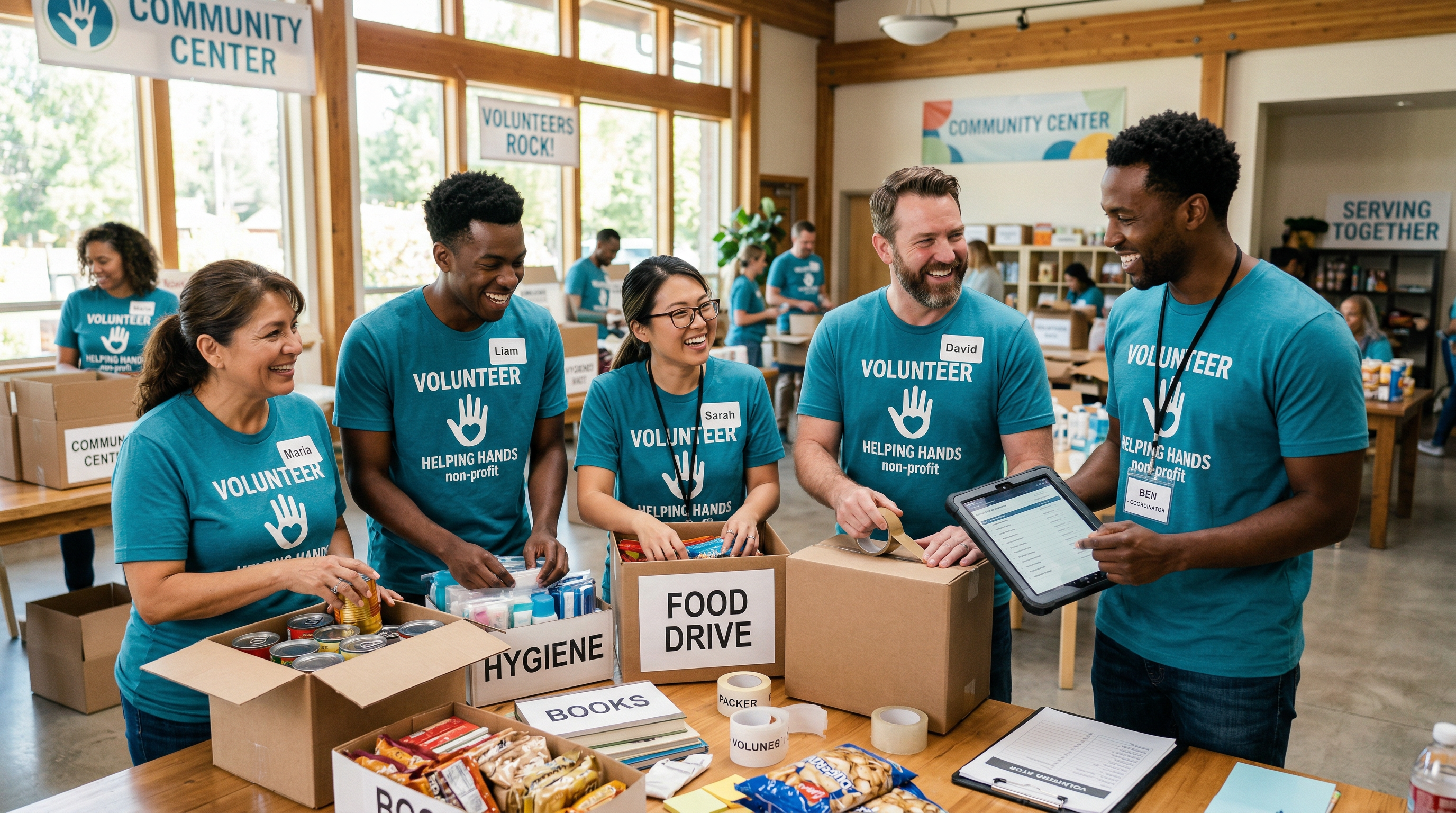
Every year, nonprofits across North America lose roughly one in three volunteers. The average volunteer retention rate sits at about 65%, and some organizations report numbers as low as 40%. When each volunteer hour is now valued at $34.79 in the United States, losing even a handful of dedicated volunteers costs thousands of dollars in unrealized capacity every year. But the financial impact barely scratches the surface. Volunteers who leave take institutional knowledge, community relationships, and untapped fundraising potential with them.
The good news: most of the reasons volunteers leave are entirely preventable. The challenge is that many nonprofits still manage volunteers with spreadsheets, email threads, and good intentions rather than the same data-driven approach they use for donors. Here is how to change that.
The Volunteer Crisis Is a Data Problem
Volunteer participation has been declining for years, and the numbers are stark. In the United States, formal volunteering dropped more than 23% between 2019 and 2021, and recovery has been slow. Nearly half of nonprofit CEOs surveyed in 2022 said recruiting enough volunteers was still "a big problem," representing a 62% increase from 2003.
The problem is not just recruitment. It is retention. According to the Corporation for National & Community Service, volunteers who serve 50 or more hours per year are 40% more likely to return the following year than those who serve fewer than 14 hours. That insight alone should change how organizations think about volunteer engagement: the goal is not just to get people in the door but to deepen their involvement quickly.
Yet most nonprofits lack the systems to track this kind of data. Volunteer sign-up sheets and manual hour logs do not tell you who is at risk of lapsing, which volunteers are trending toward higher engagement, or which supporters are giving both time and money. A CRM that tracks volunteer activity alongside donor data fills that gap.
Your Volunteers Are Your Best Donor Prospects
Here is the statistic that should reshape every nonprofit's volunteer strategy: 76% of volunteers donate to the organizations where they volunteer. Research from Fidelity Charitable found that 87% of volunteers report overlap between their volunteer and financial support, and 50% say volunteering leads them to give more money than they otherwise would.
Volunteers do not just give time. They give money, recruit other supporters, and become your most reliable advocates. But if your volunteer data lives in one system and your donor data lives in another, you will never see the full picture of that relationship. You will not know that the volunteer who logs 10 hours a month has never been asked to donate, or that the monthly donor who stopped giving six months ago is still showing up every Saturday to sort food bank inventory.
A unified CRM approach means treating every supporter as a whole person rather than splitting them into separate categories that never talk to each other.
5 Steps to Build a Volunteer Program Your CRM Can Actually Support
1. Track Volunteer Data With the Same Rigor as Donor Data

If you track every $25 donation but have no record of who volunteered at last month's gala, you are leaving insight on the table. At minimum, your CRM should capture:
- Contact information and communication preferences
- Volunteer history: dates, events, roles, and hours
- Skills and interests: what they want to do versus what you need done
- Engagement frequency: how often they show up and whether that is trending up or down
- Crossover activity: are they also donors, event attendees, or board members?
This data does not need to be perfect on day one. Start by logging volunteer hours and connecting volunteer records to existing contact profiles in your CRM. Even that basic integration provides visibility most organizations lack.
2. Nail Your Onboarding (First Impressions Determine Retention)
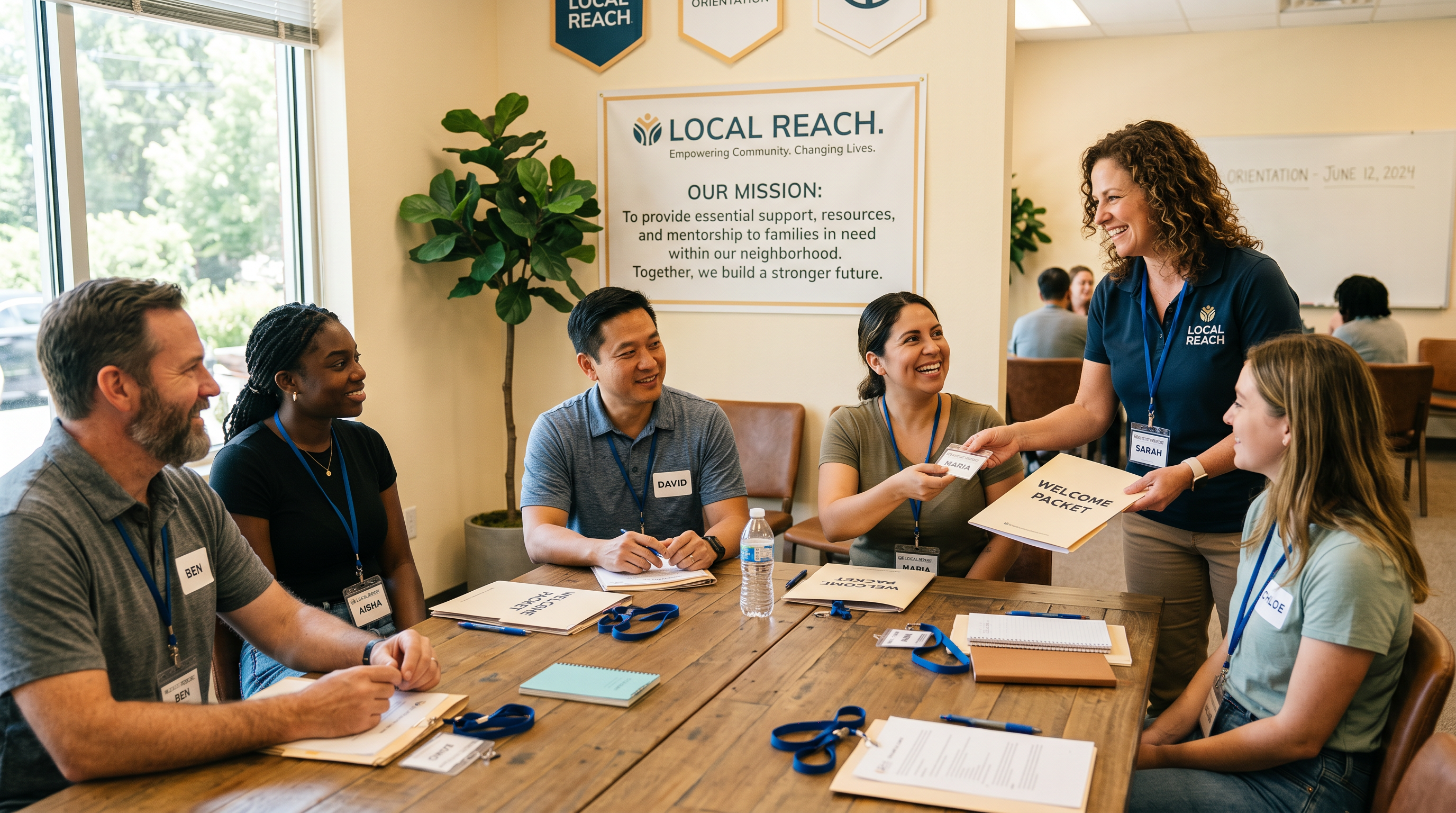
Research consistently shows that volunteers who feel welcomed and well-prepared are significantly more likely to return. Yet many nonprofits treat onboarding as an afterthought: a quick hello, a vague description of the task, and a hope for the best.
A structured onboarding process should include:
- A welcome message or packet that explains your mission and how their role supports it
- Clear role expectations with specific tasks, time commitments, and points of contact
- A buddy system that pairs new volunteers with experienced ones. Social connection is one of the strongest predictors of whether a new volunteer returns
- Access to scheduling tools so they can manage their own availability
Store onboarding completion in your CRM so you can track which volunteers received a full orientation and which were dropped into shifts without context. Over time, you will likely see a direct correlation between thorough onboarding and retention.
3. Segment Your Volunteers (Just Like You Segment Your Donors)
Not all volunteers need the same communication. A first-time event volunteer has different needs than a weekly regular who has been with your organization for three years. Segmentation lets you tailor outreach and reduce the one-size-fits-all messaging that makes volunteers feel like interchangeable parts.
Useful volunteer segments include:
- New volunteers (first 90 days): need check-ins, encouragement, and clear feedback
- Active regulars (monthly or more): need recognition, growth opportunities, and burnout monitoring
- Lapsed volunteers (no activity in 60+ days): need re-engagement outreach before they disappear entirely
- Volunteer-donors (give both time and money): need integrated stewardship that acknowledges both contributions
- Corporate groups: tend to show higher retention and can open doors to matching gifts and sponsorships
Your CRM should make this segmentation automatic based on activity data rather than requiring manual tagging every quarter.
4. Build a Communication Rhythm That Prevents Silent Dropoff

The number-one reason volunteers disengage is not burnout or scheduling conflicts. It is feeling undervalued and disconnected. When communication drops off between shifts, volunteers start to wonder if their contribution mattered at all.
A simple communication cadence that works:
- Immediately after sign-up: Welcome email with logistics and a personal note
- After first shift: Thank-you message with a specific mention of what they contributed
- Monthly: Impact update showing what volunteers collectively accomplished
- Quarterly: Personal check-in asking for feedback and offering new opportunities
- Annually: Year-in-review with individual stats (hours, events, impact)
Automate what you can through your CRM, but keep the personal touches genuine. A two-sentence email from a program director saying "We noticed you have been with us for six months and we are grateful" lands harder than a templated mass email ever will.
5. Create Growth Pathways (Volunteers Leave When They Plateau)
According to one study, 36% of people stop volunteering because the work is not challenging enough. Experienced volunteers need opportunities to grow, or they will find them elsewhere.
Growth pathways can include:
- Mentorship roles: pairing experienced volunteers with newcomers
- Leadership positions: shift leads, event coordinators, or committee chairs
- Skill-based volunteering: matching professionals with projects that use their expertise (marketing, IT, grant writing)
- Board or advisory involvement: the deepest level of engagement for long-term supporters
Track these progressions in your CRM. When a volunteer moves from sorting donations to leading a team of five, that trajectory tells you something important about their commitment and their potential as a major donor.
A Note on Canada vs. the United States
Volunteer trends in Canada mirror the U.S. pattern but with some distinct data. According to Imagine Canada's analysis of Statistics Canada's 2023 Survey of Giving, Volunteering and Participating, the percentage of Canadians volunteering dropped from 41% in 2018 to 32% in 2023. Total volunteer hours fell to 1.2 billion, down from 1.7 billion in 2018, a decline equivalent to roughly 451,000 full-time positions.
Women in Canada showed a particularly notable drop, with their volunteering rate falling from 44% to 34% and total hours declining by about a third. Meanwhile, 83% of Canadian nonprofits reported increased demand for services in 2024 according to Volunteer Canada's NVAS survey, creating a widening gap between community needs and available capacity.
For Canadian charities, the regulatory landscape also matters. Canada Revenue Agency (CRA) rules around volunteer expense reimbursement and eligible volunteer activities differ from IRS guidelines in the U.S. Make sure your CRM can flag these distinctions if you operate in both countries.
The Bottom Line
Volunteer management is not a side task. It is a fundraising strategy, a retention strategy, and an organizational resilience strategy rolled into one. When 76% of your volunteers are also willing to write a check and each hour they contribute is worth nearly $35, the question is not whether you can afford to invest in better volunteer management. It is whether you can afford not to.
Start with three things: put volunteer data in your CRM, build an onboarding process worth remembering, and communicate with your volunteers the way you communicate with your best donors. The rest will follow.
Phil at CharityPack writes about nonprofit technology, operational strategy, and systems that help charitable organizations do more with less.