
Hook & Context
Picture a longtime donor calling your office. She has given every year for eight years. She mentions that she spoke with "Sarah" last spring about naming a gift after her late husband, and she wants to know where that conversation landed.
Sarah left in July. Nobody knows what she promised. The CRM shows eight years of gift amounts and nothing else.
That call happens all the time, because fundraisers change jobs often. According to the Chronicle of Philanthropy, the average fundraiser stays in a job for just 16 months, and the direct and indirect cost of replacing one is about $127,650. Nonprofit Quarterly points out the mismatch: a fundraiser may be in a role for less than two years, while a major donor relationship can take much longer to build.
Meanwhile, donor retention is still stuck. The Fundraising Effectiveness Project reported overall retention edging up only from 43.1% to 43.3%, with new donor retention essentially flat. When more than half of donors do not come back, you cannot afford to also lose the relationship history behind the ones who stay.
The fix is not glamorous. It is interaction notes: short, consistent records of every meaningful conversation, stored in your CRM rather than in someone's inbox, notebook, or memory.
Insight & Analysis
Most nonprofit CRMs are good at storing transactions. They record the gift date, amount, fund, and receipt number. What they often lack is the context: why the donor gave, what they care about, what they were told, and what should happen next.
That context is where the relationship actually lives. A gift amount tells you what happened. A note tells you what it meant and what comes next.
Nonprofit Hub puts it bluntly with the advice to stop storing relationship intelligence in transaction notes. When notes are buried inside individual gift records, or on sticky notes, nobody can find them later. StratusLive makes the same point from the software side: every touchpoint belongs on one constituent record so stewardship survives staff turnover.
There are three common failure modes in small nonprofits:
- Notes live outside the CRM. Email threads, personal notebooks, and phone call memories leave with the person.
- Notes are inconsistent. One staff member writes a paragraph, another writes "called, good chat," and a third writes nothing. Nobody can scan the history quickly.
- Notes contain things they should not. Health details, family conflict, gossip, or opinions about the donor create privacy risk and would be embarrassing if the donor ever asked to see their file.
The third point matters more than most teams realize. In many jurisdictions, donors can ask to see what you hold about them. A good rule is simple: never write anything in a donor record that you would not be comfortable reading aloud to that donor.
Actionable Steps
You do not need a new system to fix this. You need a small set of habits that everyone follows.
1. Define a simple note taxonomy
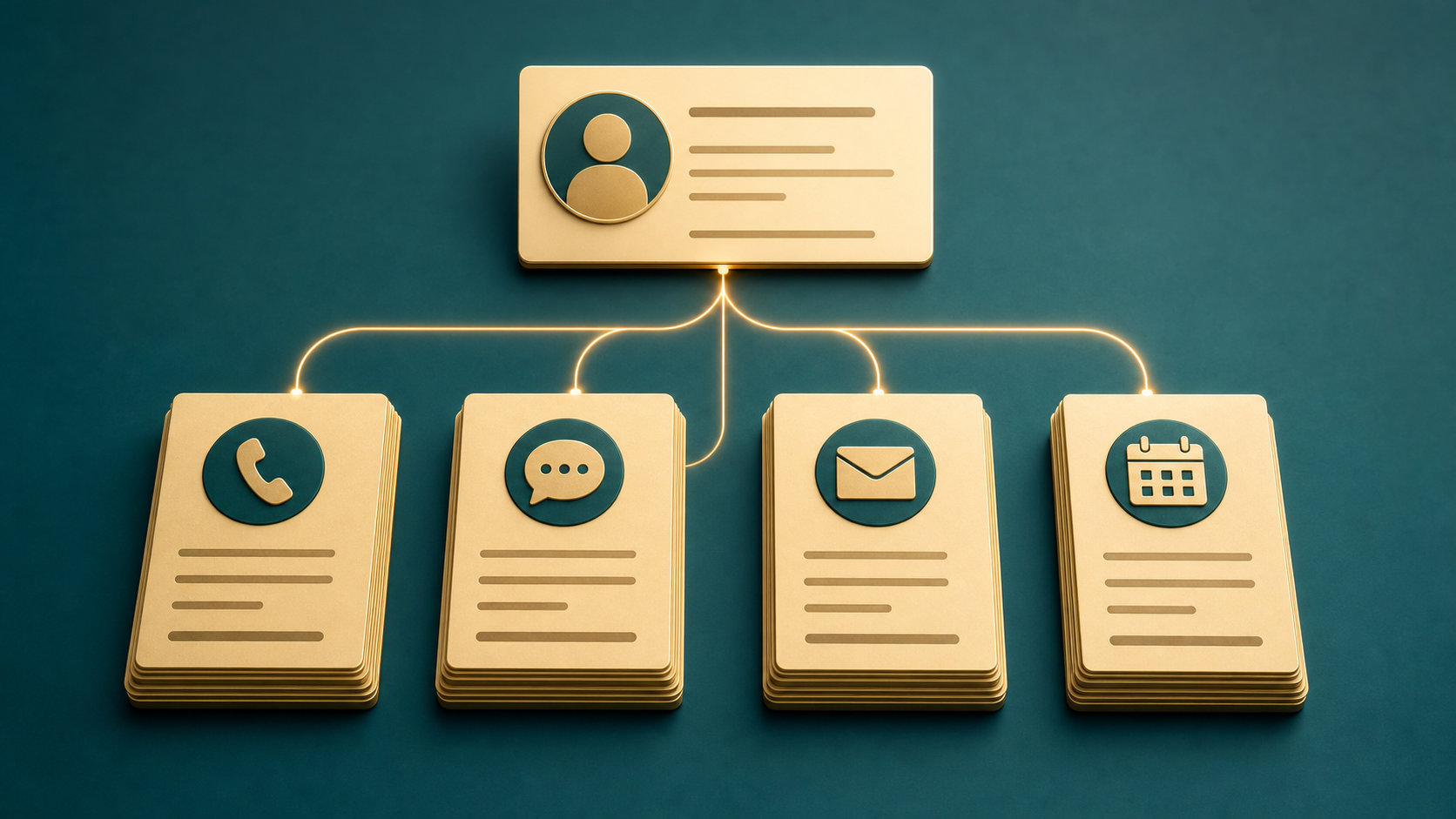
Pick five or six interaction types and use them consistently:
- Phone call
- Meeting (in person or video)
- Email (meaningful exchanges only, not every newsletter)
- Event conversation
- Letter or card
- Other
Consistent types make notes filterable. You can quickly answer questions like "When did anyone last speak to this donor in person?" without reading every entry.
2. Use the same five fields every time
Every note should answer the same questions:
- Date: When did it happen?
- Type: Which category from your list?
- Staff member: Who spoke with the donor?
- Summary: Two to four sentences on what was discussed.
- Next step: What happens next, who owns it, and by when?
The next step field is the most important one. A note without a next step is a memory. A note with a next step is a plan.
3. Adopt a 24-hour logging rule
Details fade quickly. Ask every staff member and relationship-holding volunteer to log significant interactions within 24 hours. Make it part of the job, not a favour. If your CRM supports mobile entry, encourage people to log notes right after a meeting, while they are still in the car or walking back to the office.
4. Write for the next person, not for yourself
A good note should make sense to someone who has never met the donor. Avoid private shorthand. Instead of "Talked re: J, will follow up," write "Discussed a possible memorial gift in honour of her late husband, John. She wants to see options for a named scholarship. Send two options by October 15."
That second version is exactly what a replacement fundraiser needs on day one.
5. Set clear rules about what not to record
Create a short list of things your team should never write in a donor note:
- Health conditions or diagnoses, unless the donor explicitly asks you to note something relevant to how they want to be contacted
- Family disputes or relationship gossip
- Personal opinions about the donor's personality
- Assumptions about wealth that are not based on appropriate, documented sources
- Anything said "off the record"
If a donor shares something sensitive that affects how you should contact them, record only what is needed. For example: "Prefers no phone calls until January. Email only." You do not need the reason.

6. Audit note quality every month
Once a month, pull a random sample of ten donor records with recent activity. Check whether each has:
- A note for each significant interaction
- A clear next step
- No sensitive content that breaks your rules
- Enough context for a new staff member to understand the relationship
Share the results with the team. This is not about blaming people. It is about making the standard visible.
7. Build notes into staff offboarding
When a fundraiser gives notice, schedule a portfolio handover. Have them review every assigned donor and add a short "handover note" covering relationship status, open promises, preferences, and suggested next steps. This single habit can protect years of relationship-building.

Regional Insight: Canada and the U.S.
In Canada, privacy rules for charities depend on the activity and the province. The Office of the Privacy Commissioner of Canada notes that PIPEDA usually does not apply to charities' core fundraising, but it can apply to commercial activities such as selling, bartering, or leasing donor lists. Where PIPEDA does apply, organizations must generally give individuals access to their personal information on request, in a complete and timely way, at little or no cost. Provincial laws in places such as Alberta, British Columbia, and Quebec may also be relevant, so check with a privacy professional for your situation.
In the U.S., most state consumer privacy laws exempt nonprofits, but not all. According to the IAPP, Colorado, Delaware, and Oregon do not broadly exempt nonprofits. The Oregon Department of Justice confirms the Oregon Consumer Privacy Act took effect for nonprofits on July 1, 2025, and the Colorado Attorney General notes that Colorado's law gives consumers rights to access, delete, and correct their personal data.
The practical lesson is the same in both countries: write every note as if the donor may one day read it.
Conclusion
Fundraisers will keep moving between jobs. You cannot fully control that. What you can control is whether each relationship survives the move.
Start small. Pick a note taxonomy, use the same five fields, log within 24 hours, write for the next person, set clear privacy rules, audit monthly, and build notes into offboarding. None of these steps require new software or a bigger budget. They require consistency.
When the next longtime donor calls asking about a conversation from last spring, your team should be able to open the record and say, "Yes, we have that right here."